العربية
 中文 (中国)
 فارسی
فارسی Türkçe
 Русский

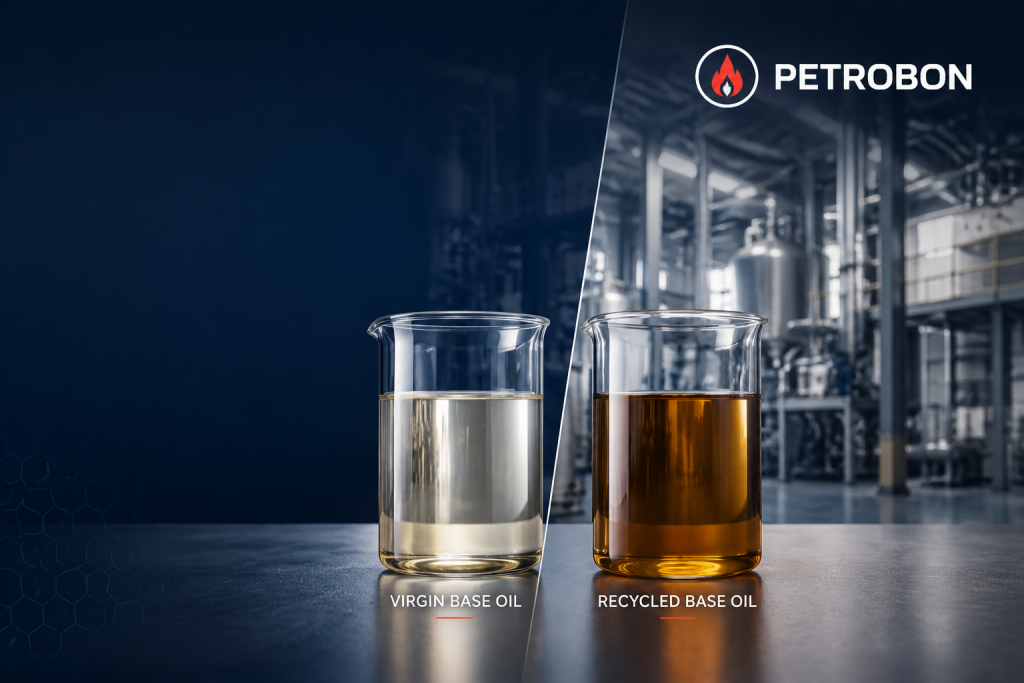
Lubricant manufacturers and blenders constantly face a critical operational challenge: balancing the cost of raw materials with the required quality of the end product. As a trusted international supplier, Petrobon understands that choosing between virgin and recycled stocks can significantly impact both your profit margins and your product performance.
While virgin oil represents the traditional gold standard, modern re-refining technologies have made recycled base oil a highly competitive alternative. In this guide, we provide a head-to-head comparison of virgin vs recycled base oil, exploring their production methods, quality specifications, cost economics, and best-use applications to help you make an informed procurement decision.
What Is Virgin Base Oil?
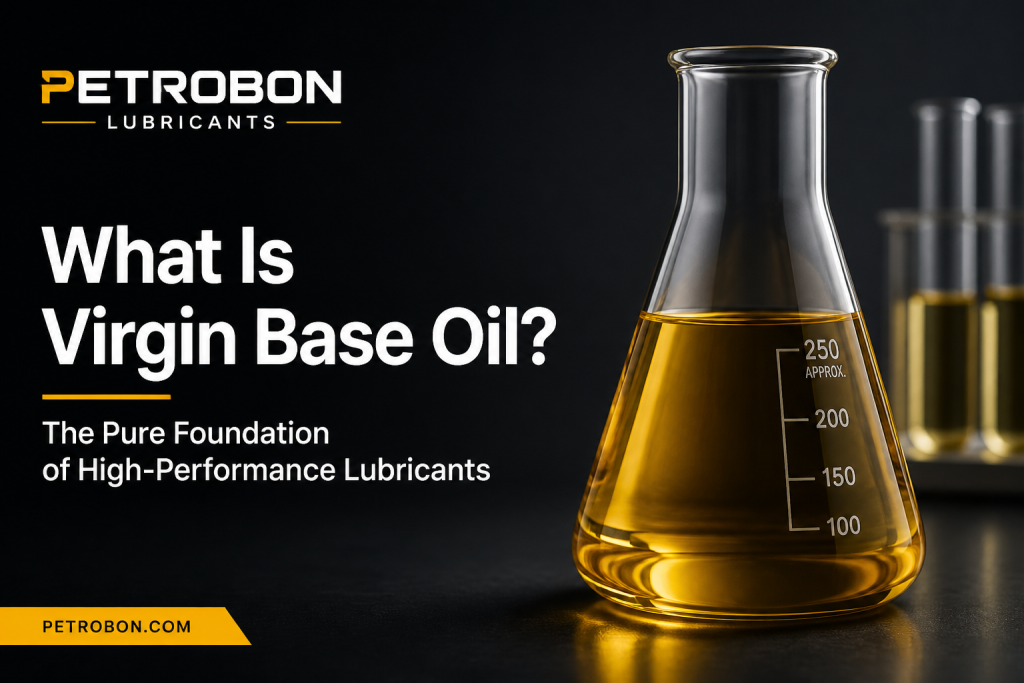
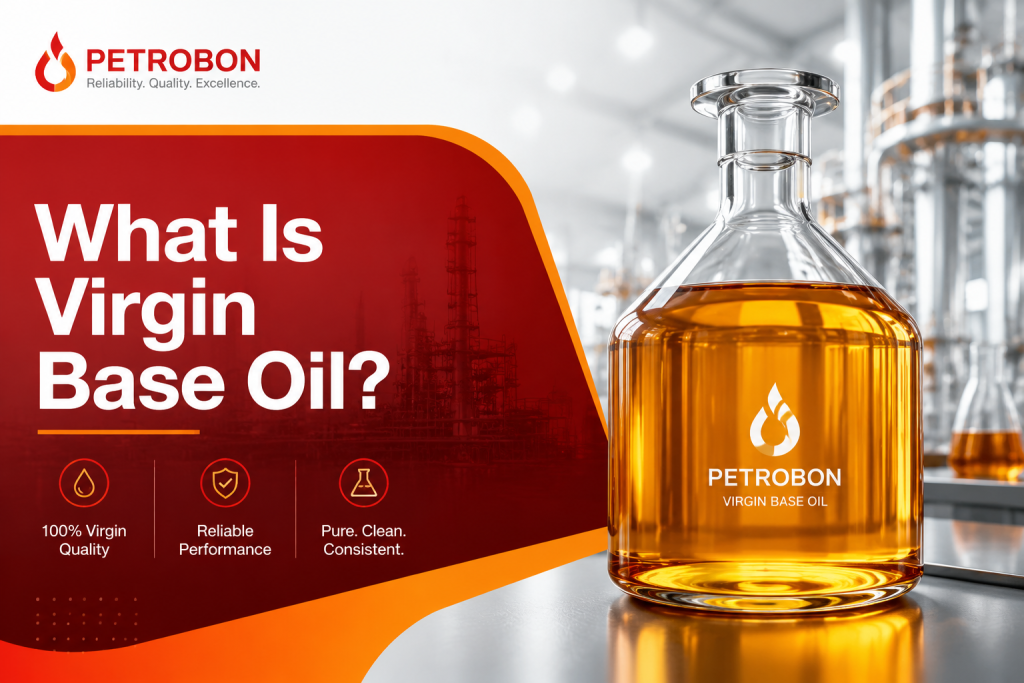
Virgin base oil is newly refined oil extracted directly from crude oil. After crude oil is extracted and transported to a refinery, it undergoes vacuum distillation to separate the heavy lubricating fractions. From there, it is subjected to either solvent extraction (creating Group I base oils) or advanced hydrocracking (creating Group II and III base oils). Because it is produced directly from crude without prior use, it sets the baseline for purity and performance in the lubricants industry.
For a deeper understanding of this process and how base oils are categorized, read our foundational guide: What Is Base Oil and How Is It Used in Lubricant Manufacturing?
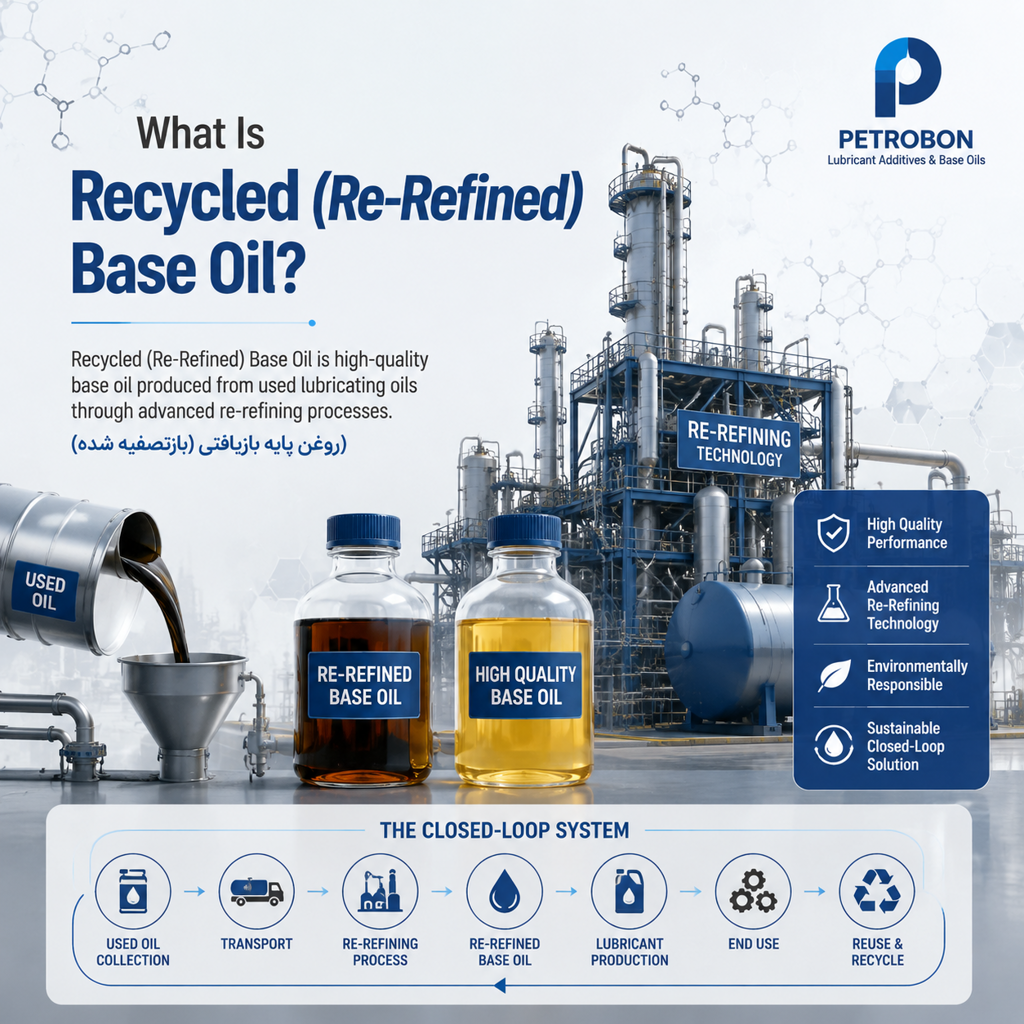
What Is Recycled (Re-Refined) Base Oil?
There is a common misconception in the industry that recycled base oil is merely “filtered” used oil. This is incorrect. High-quality recycled base oil undergoes a rigorous re-refining process. Used motor oils and industrial fluids are collected and subjected to dehydration, defatting, and high-temperature vacuum distillation to strip away degraded chemical additives, water, heavy metals, and impurities.
The result is a base stock that has been returned to a virgin-like state, retaining the core molecular structure needed for lubrication.
To see the exact technical steps involved, refer to our article: How Re-Refined (Recycled) Base Oil Is Produced and Tested.
Head-to-Head Comparison: Quality and Specs
When reviewing a Certificate of Analysis (COA), how do these two options compare?
- Viscosity & Flash Point: Both virgin and high-quality re-refined oils can meet strict parameters for kinematic viscosity and flash point. A recycled SN150 or SN500 can perform almost identically to its virgin counterpart in basic industrial friction tests. (Unsure which viscosity you need? See our Base Oil SN500 vs SN150 comparison).
- Color and Odor: This is where the most noticeable differences lie. Virgin base oil generally has a much lighter color and a milder, neutral odor. Recycled base oil, even after extensive re-refining, often retains a darker tint (due to trace oxidation byproducts) and a slightly stronger odor.
- Consistency: Virgin oil offers batch-to-batch consistency that is highly predictable. Recycled oil quality can fluctuate slightly depending on the quality of the waste oil collected by the re-refinery, making it crucial to buy from a reputable supplier with strict COA verification.
Cost Analysis and Economics
The primary advantage of recycled base oil is its cost-effectiveness. Because the raw material (used oil) is cheaper than crude oil, and the energy required to re-refine used oil is generally lower than extracting and refining virgin crude, recycled base oil trades at a discount.
For commercial lubricant blenders, substituting even 20% to 30% of a virgin blend with high-quality recycled oil can drastically reduce overall production costs, yielding higher profit margins in highly competitive regional markets without sacrificing essential lubricating properties.
Best Applications for Each Type
Choosing between the two ultimately depends on your target market and performance requirements.
- Virgin Base Oil Applications: Premium passenger car motor oils (PCMO), high-stress turbine oils, advanced hydraulic systems, and any application requiring strict Original Equipment Manufacturer (OEM) certifications.
- Recycled Base Oil Applications: Heavy-duty industrial gear oils, agricultural machinery lubricants, general-purpose hydraulic fluids, form oils, and cost-sensitive regional markets. (Learn more in our guide on Recycled Base Oil SN150: A Cost-Effective Option for Central Asian Buyers).
Sourcing Virgin and Recycled Base Oils with Petrobon
At Petrobon, we believe in giving our clients transparent choices. Whether your formulation demands the uncompromised purity of virgin base oil or the economical advantages of re-refined stocks, we supply both. Every shipment we export is backed by rigorous testing and a verified Certificate of Analysis, ensuring you get exactly what you pay for.
Frequently Asked Questions (FAQ)
Is recycled base oil safe for engine lubricants?
Yes, provided it is properly re-refined and blended with the correct additive packages. While virgin oil is generally preferred for modern, high-performance synthetic engine oils, high-quality recycled base oil is frequently used in older engines and heavy-duty diesel applications.
Why is recycled base oil darker in color?
The darker color is typically caused by residual carbon and oxidation byproducts from its previous lifecycle. Even after intense re-refining, these trace elements can leave a darker tint. However, color is not always a direct indicator of lubricity or performance.