العربية
 中文 (中国)
 فارسی
فارسی Türkçe
 Русский

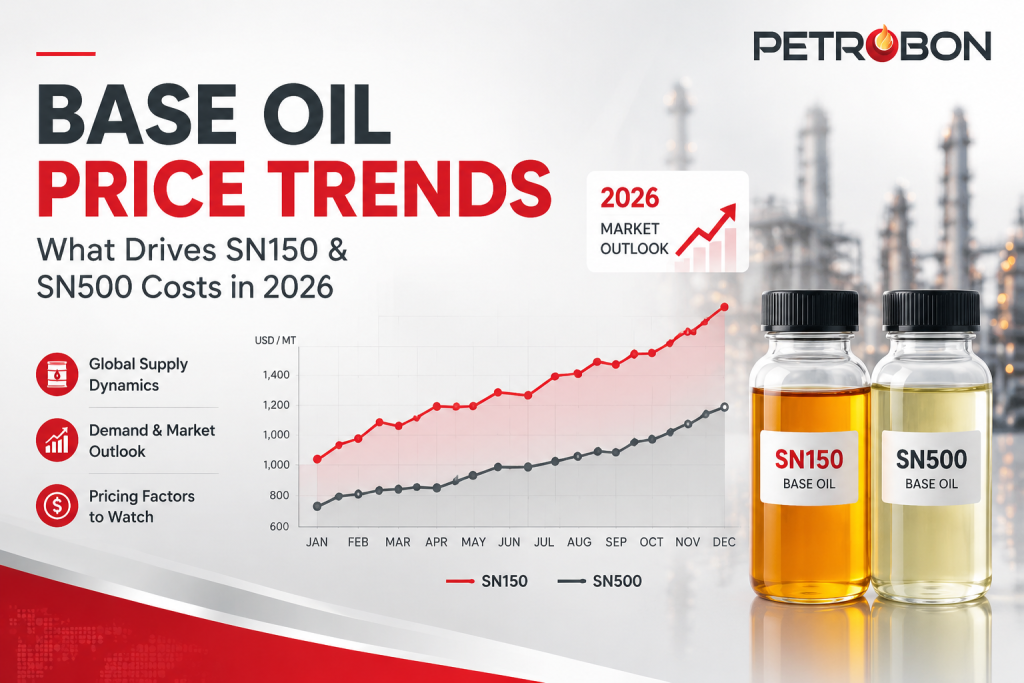
For procurement managers, lubricant manufacturers, and commercial blenders navigating the global energy market, pricing can often feel like an unpredictable moving target. Attempting to time commodity purchases perfectly or waiting for the absolute “bottom” of a market cycle rarely works. As a premier international chemical and petrochemical supplier, Petrobon recognizes that strategic planning begins with understanding the fundamental forces behind price volatility.
Rather than providing static price forecasts that quickly become outdated, this comprehensive guide breaks down the core structural drivers influencing base oil price trends 2026. By examining the interplay of raw material feedstocks, currency dynamics, regional industrial activity, and logistics routes, buyers can forecast budget requirements and build a more resilient procurement strategy.
Crude Oil and Feedstock Costs
Base oil is an upstream refined product derived from vacuum gas oil (VGO) and crude distillation cuts. Consequently, raw feedstock pricing remains the single most impactful long-term baseline for any base oil market outlook.
When global crude benchmark prices shift due to geopolitical events, production quota adjustments, or macroeconomic changes, the cost of operating refining columns and procuring feedstocks changes in direct correlation. Refining margins, refinery turnaround schedules, and the competing value of fuel products (such as diesel or heating oil) dictate how much crude is allocated to base stock production, directly impacting baseline prices across global markets.
Currency Exchange Rates and International Trade
Because base oil is traded internationally, foreign exchange rate fluctuations play a defining role in a buyer’s landed costs. For importers purchasing across borders—whether in Central Asia, South Asia, or the Middle East—currency volatility can offset or amplify underlying commodity price shifts.
A stable FOB price at the loading port can still result in higher landed costs if the buyer’s local currency depreciates against the major settlement currencies. Managing currency exposure through clear payment terms, structured commercial agreements, and proactive trade planning is critical for preserving margin stability.
Regional Supply and Demand Dynamics
While global crude sets the macro trend, regional industrial activity and localized supply cycles drive short-term price momentum. Several key operational factors dictate regional availability:
- Seasonal Demand Cycles: Agricultural planting and harvesting seasons significantly boost regional demand for machinery lubricants, tractor fluids, and hydraulic oils. Similarly, infrastructure and construction activity in the spring and summer months accelerates demand for heavy-duty commercial engine oils.
- Refinery Maintenance and Turnarounds: Scheduled seasonal maintenance (overhauls) or unexpected plant shutdowns at major regional refineries can temporarily restrict local supply, leading to regional premiums even if global crude prices remain steady.
Freight, Packaging, and Logistics Costs
The base product price is only one component of the total procurement equation. Freight rates, transit routes, and packaging selection create significant variations in the final delivered cost per metric ton.
Packaging formats directly dictate shipping efficiency. Buyers ordering in steel drums gain warehouse convenience but incur packaging surcharges and lower payload efficiency per container. Conversely, utilizing high-volume flexitanks or ISO tanks maximizes container capacity and lowers shipping cost per liter for bulk importers.
To evaluate the exact logistical trade-offs for your specific transit route, explore our detailed guide: Base Oil Packaging and Bulk Shipping: Drums, Flexitanks and ISO Tanks.
SN150 vs. SN500: Do Viscosity Grades Move Together?
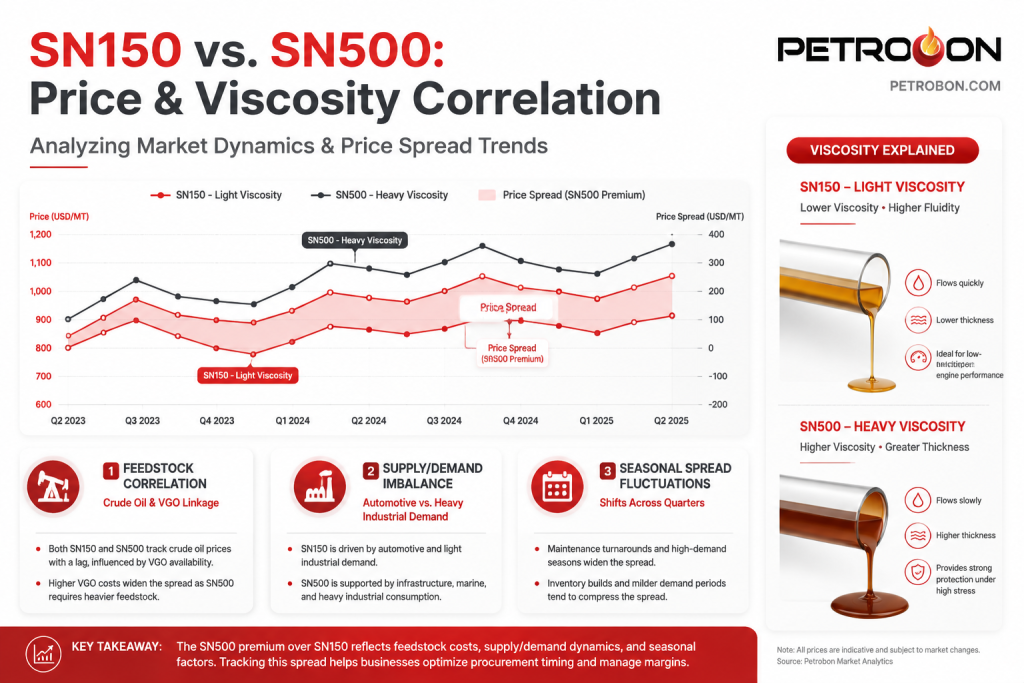
A common assumption among buyers is that all Group I grades move in exact synchrony. In reality, the base oil sn150 price and base oil sn500 price frequently experience divergent market pressures.
SN150 is a light-viscosity base stock heavily utilized in hydraulic systems, light automotive formulations, and specialty industrial applications. In contrast, SN500 is a heavy-viscosity workhorse primarily required for heavy-duty commercial vehicle engine oils and industrial gear lubricants. If regional heavy transport and construction activity surges, the demand for SN500 can outpace SN150, widening the price spread between the two grades.
To learn more about the distinct technical profiles and processing characteristics of these grades, see our direct comparison: Base Oil SN500 vs SN150: Choosing the Right Viscosity Grade for Your Blend. Furthermore, formulators combining both grades to meet specific viscosity targets can reference our Base Oil Blending Guide: Combining SN150 and SN500 for Target Viscosity.
How Buyers Can Manage Price Risk and Volatility
Rather than attempting to speculate on day-to-day market movements, experienced procurement professionals employ proven risk-management strategies:
- Plan Around Demand Peaks: Anticipate seasonal demand spikes in your local market by securing material ahead of peak agricultural or construction periods.
- Diversify Formulation Recipes: Evaluating secondary raw materials, such as high-quality re-refined stocks for cost-sensitive industrial lubricants, can insulate blending operations against virgin crude spikes (see our guide on Virgin vs Recycled Base Oil: Quality, Cost and Application Differences).
- Partner with Transparent Suppliers: Establishing a consistent relationship with an established international trading partner provides early visibility on market trends, allocation availability, and pricing shifts.
Secure Transparent, Reliable Base Oil Sourcing with Petrobon
Petrobon acts as a strategic supply chain partner for lubricant manufacturers and blenders across international markets. By maintaining strong relationships with tier-one refineries and offering flexible packaging options—from steel drums to flexitanks and ISO tanks—we help buyers navigate price movement with clear, timely market quotes and secure logistical execution.
Frequently Asked Questions (FAQ)
Does SN500 always cost more than SN150? In most market conditions, SN500 carries a price premium over SN150 due to the additional refining severity and higher boiling fractions required to produce heavier viscosity base oils. However, the exact price gap between the two grades fluctuates depending on regional supply balances and specific finished-product demand.
How often do base oil prices change in international trade? While underlying crude oil and commodity futures fluctuate continuously on international exchanges, commercial base oil spot quotes and contract prices are typically adjusted periodically based on weekly refinery postings, regional supply availability, and freight rate shifts.
Is recycled base oil less exposed to global price swings? Yes. Re-refined base oil pricing is primarily tied to local collection and re-refining processing costs rather than direct crude benchmark volatility. As a result, recycled base oils often offer more predictable pricing structures for cost-sensitive industrial applications.